


Bring a photo ID, your insurance card, your prescription medications in the original pharmacy bottles, and about a week of comfortable clothes. Those four things cover admission at nearly every program, including men’s residential treatment at Heartwood Recovery.
Everything past them depends on the facility, which is why one call to admissions beats any checklist you find online.
Key Takeaways
- Four things are non-negotiable: photo ID, insurance card, medications in original labeled bottles, and a written medication list with doses and prescriber contacts.
- Pack seven to ten days of clothes, not thirty. Storage is limited in residential treatment, and laundry arrangements vary by program.
- Call admissions before you pack, not after. Electronics and medication rules differ enough between facilities to change half your bag.
- Leave valuables, cash, and anything you would hate to lose at home. Facility storage is a fallback, not a plan.
- Your level of care decides your bag. Residential means packing for nights. PHP and outpatient mean packing for a commute.
The core list
Every program asks for roughly the same things. Start here.
Documents. A valid government-issued photo ID, your insurance card, and two emergency contacts with phone numbers. If you haven’t confirmed coverage yet, you can start a benefits check before you leave home. We’ll verify your benefits in minutes, with no obligation and no cost to you.
Medications. Everything you take, in the original pharmacy bottles, plus a written list. More on this below, because it’s where most problems happen.
Clothing. Seven to ten days of casual, comfortable clothes. Add workout clothes, sleep clothes, and a light jacket. Austin runs hot, but group rooms run cold. Bring closed-toe shoes, athletic shoes, and shower sandals.
Toiletries. Toothbrush, toothpaste, deodorant, shampoo, body wash, a comb, sunscreen, and chapstick. Bring a disposable razor rather than an electric one. Skip anything containing alcohol, including mouthwash, since most programs won’t accept it.
A few things that make the room yours. A notebook and pens, a book or two without explicit content, photos of the people you’re doing this for, and your 12-step literature if you already have it.
Five categories, one bag. Men consistently overpack clothing and underpack paperwork.
How to pack your medications
This is the part worth getting right, because a missing label can delay your intake.
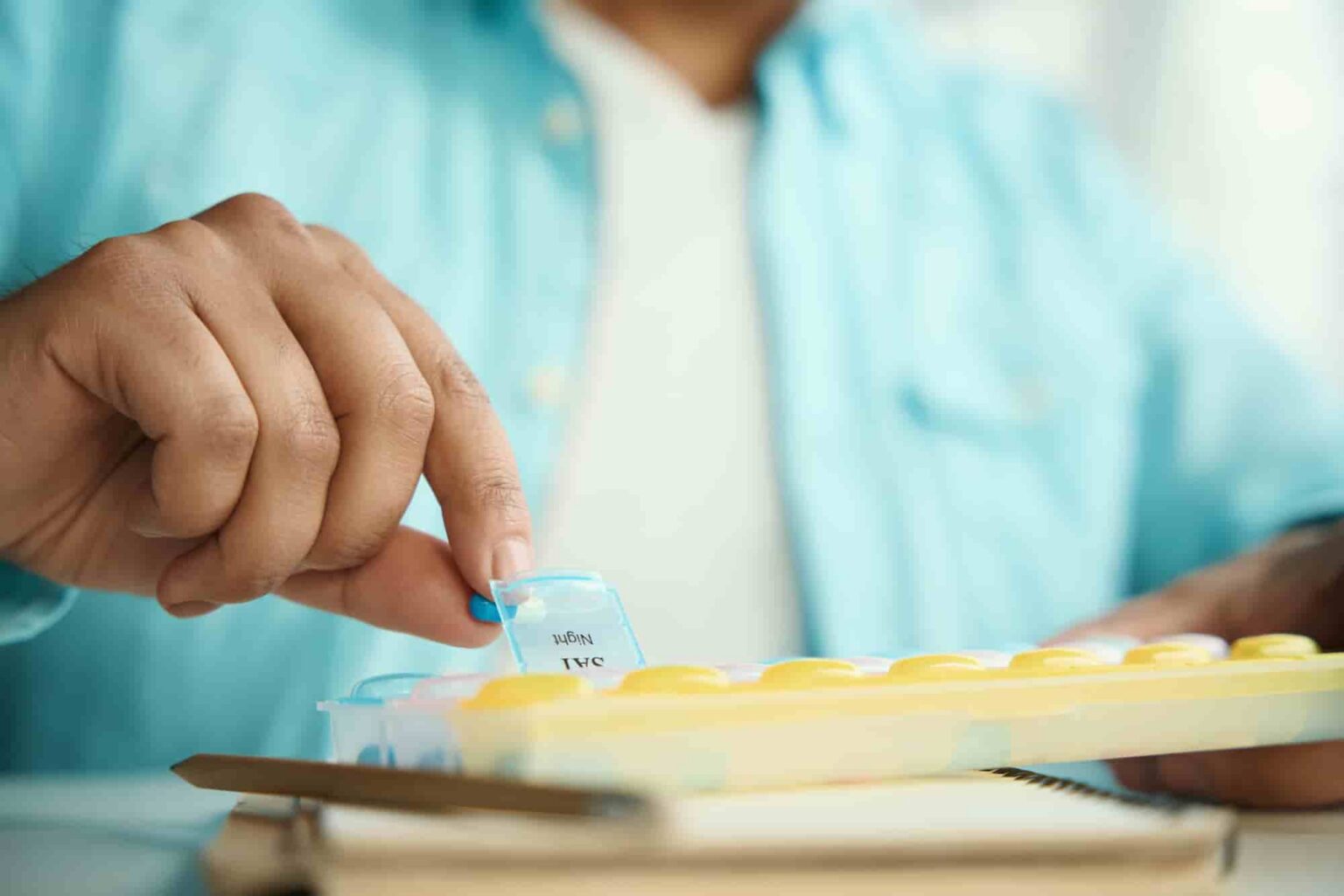
Keep every medication in its original pharmacy container with the label intact. Do not transfer pills into a weekly organizer for the trip. The label is what confirms the prescription belongs to you, and staff cannot verify a loose pill.
Bring a typed list alongside the bottles. Six fields per medication is enough:
| Medication | Dose | Rx number | Prescriber | Pharmacy phone | What it’s for |
|---|---|---|---|---|---|
Print one copy for admissions, keep one for yourself, and photograph it on your phone.
Include over-the-counter products, vitamins, and supplements on that list even if you leave the bottles at home. Some interact with treatment medications, and a few contain alcohol. Disclose them.
If you take a medication for opioid use disorder, bring the prescriber documentation with it and tell admissions before you travel so the clinical team can plan. Call your pharmacy early too, since early refills on controlled medications can require prescriber documentation and take days to arrange.
At Heartwood, all medications are collected, documented, and distributed by our medical staff. Our admissions team will confirm exactly how much to bring before you arrive. We don’t provide medical detox on site. If you need it, we coordinate it with a partner facility and arrange a door-to-door transfer.
What to leave at home
Programs remove these items because they create overdose, injury, or fire risk, or because they pull focus away from the work.
- Alcohol, illegal drugs, and paraphernalia
- Weapons and sharp objects
- Unprescribed medications and supplements
- Mouthwash and grooming products containing alcohol
- Laptops, tablets, and gaming devices
- Large amounts of cash, jewelry, and valuables
- Sexually explicit material
Tobacco and vape policies vary. Ask staff rather than assuming.
What changes by level of care
Residential means you sleep on site, so you pack for nights and days. Everything else is a commute.
| Residential | PHP | IOP and OP | |
|---|---|---|---|
| Where you sleep | On site | At home | At home |
| Time on site | 24-hour care | Most of the day, weekdays | A few hours, several days a week |
| What to bring | Seven to ten days of clothing, sleep clothes, toiletries, full document set | Day bag, water bottle, notebook, layers | Small essentials pouch: ID, insurance card, medication list, pen |
| Medications | Collected and administered by nursing | Carried in original bottles, dosing may be supervised | Carried in original bottles |
| Electronics | Held securely, limited scheduled access | Allowed, restricted during groups | Allowed, restricted during groups |
Our Partial Hospitalization Program and Intensive Outpatient Program both run this way, and men often step into one of them after residential. If you’re still deciding between them, we break down how PHP and IOP differ in more detail.
Five questions to ask admissions
Make the call before you pack. Two of these will change what goes in your bag.
- What’s your electronics policy, and will my phone or charger stay with me?
- How do you handle prescribed medications, and how much should I bring?
- Do you provide linens, towels, and laundry, or should I pack them?
- What’s my arrival window, and what happens if I’m running late?
- What do you do with valuables, and what should I just leave at home?
If you only ask one, ask about electronics and medications together. Those two answers change more bags than anything else on the list.

What happens to your bags on arrival day
At Heartwood, plan on two to four hours for the full intake: paperwork, a medical evaluation, orientation, and time to settle in.
All belongings are checked in and inventoried. The search is standard, it applies to everyone, and it exists so every man in the program walks into a substance-free environment. Items you can’t keep during residential treatment are stored securely and returned at discharge.
Your phone goes into secure storage and comes back during approved phone times, typically after your first 72 hours. Your clinical team decides the specific plan based on where you are.
Keep your documents and medications in one small bag you hold onto until intake is finished. You’ll be asked for both early. Our full admission-day walkthrough covers the rest of the first week, including our complete packing list and our phone and visitor policies.
If you’re flying
Put every medication in your carry-on. Never in checked luggage.
Keep the pharmacy labels visible so screening officers can match the name on the bottle to the name on your ID. Medications are exempt from the standard liquids limit, and you can request a private screening if you’d rather not discuss them at the checkpoint.
For needles, insulin pens, or other injectables, pack them in a rigid container in your carry-on and bring a prescriber note. TSA publishes guidance for travelers with medical conditions through TSA Cares.
Tell admissions your flight details before you leave. We’ll confirm pickup logistics and your arrival window ahead of time.
Frequently asked questions
How much clothing should I actually bring to rehab?
About seven to ten days of casual, comfortable clothing, plus workout clothes and sleep clothes. Storage space in residential treatment is limited, and most programs have laundry arrangements you can ask admissions about. Men consistently overpack clothing and underpack documents.
Can I bring my phone to rehab?
At Heartwood you can bring a phone, but use is restricted early on. Your phone is held securely and returned during approved phone times, typically after your first 72 hours. Bring the charger. Leave laptops and gaming devices at home.
What happens to items the facility won’t let me keep?
All belongings are checked in and inventoried at admission. Items that can’t be kept during residential treatment are stored securely until discharge. Illegal substances and weapons are handled under facility policy and applicable law rather than stored.
How much medication should I bring to rehab?
Bring the amount admissions approves, in the original pharmacy bottles. Don’t guess. Call before you fill anything, because early refills on controlled medications can require prescriber documentation and take time to arrange.
Can I bring vitamins, supplements, or over-the-counter medicine?
Ask first. Many programs, including Heartwood, don’t accept unprescribed medications or supplements. Some over-the-counter products interact with treatment medications, and some contain alcohol. Disclose everything you take at intake, including anything you buy off a shelf.
How much cash should I bring to rehab?
A small amount, and it has limited use. Large sums create theft and diversion risk, and most programs restrict them. Leave jewelry and valuables at home rather than relying on facility storage.
What is the 60 percent rule in rehab?
The 60 percent rule is a Medicare classification requirement for inpatient rehabilitation facilities, meaning physical and medical rehabilitation hospitals. At least 60 percent of their discharged patients must have one of 13 qualifying conditions such as stroke or hip fracture. It doesn’t apply to addiction treatment programs and has no bearing on what you pack.
Ready to go
If you’re packing, the hardest decision is already behind you.
Call 737-279-7505 and we’ll walk you through what to bring, confirm your arrival window, and verify your benefits before you commit to anything.
Admissions is available around the clock, so you can reach our team any hour. If Heartwood isn’t the right fit, we’ll say so and point you somewhere that is. SAMHSA’s treatment locator is a good starting point for options outside Austin.
This content is for informational purposes only and is not a substitute for professional medical advice, diagnosis, or treatment. Always consult a qualified healthcare provider about your specific situation. If you are in crisis, call or text 988 to reach the Suicide and Crisis Lifeline.